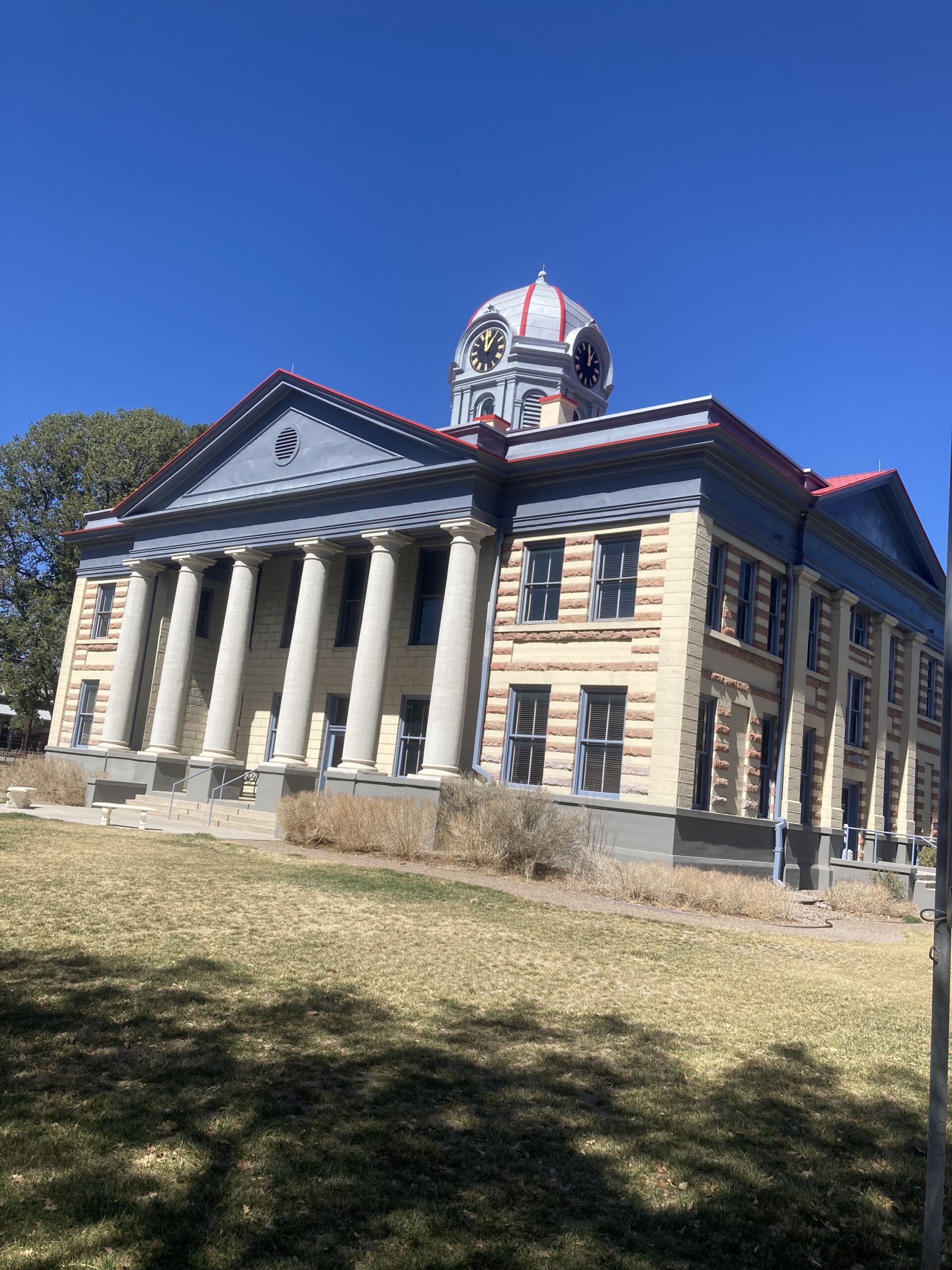
I talked about this case last September. See prior blog post here. Humphrey’s Executor v. United States, 295 U.S. 602 (1935) was decided 90 years ago. It stands for the proposition that the board members of some Federal agencies can be removed only for cause. The Humphrey’s decision specifically found that some governmental functions should be beyond politics. Pointing to the legislative history behind the act that created the Federal Trade Commission, the 1935 Supreme Court said:

“The commission is to be non-partisan; and it must, from the very nature of its duties, act with entire impartiality. It is charged with the enforcement of no policy except the policy of the law. Its duties are neither political nor executive, but predominantly quasi-judicial and quasi-legislative. Like the Interstate Commerce Commission, its members are called upon to exercise the trained judgment of a body of experts “appointed by law and informed by experience.”

Humphrey’s, at 624. The duties of the FTC have not changed appreciably since 1935. Yet, the 2026 U.S. Supreme Court chose to overrule Humphrey’s and allow Pres. Trump to fire two members of the FTC board. In Trump v. Slaughter, No. 25-332 (June 29, 2026), the Supreme Court claimed the duties of the FTC have changed, but offered no specific examples. It claimed various decisions of the Supreme Court have noted since 1935 that the duties of the FTC are largely executive and not quasi-judicial or quasi-legislative. For example, the Trump v. Slaughter decision asserted that the Supreme Court noted in a 1983 decision that when an agency exercises “legislatively delegated authority” to regulate private conduct, it exercises “[e]xecutive power.” It cited the case of INS v. Chadha, 462 U.S. 919, 953 n. 16 (1983). But, that quote does not appear in note 16 or anywhere else, at least not as it is stated. Such a clear test ought to be stated clearly. But, that test as stated, does not appear in the Chadha decision.

Removed from Politics

As the dissent points out, quasi-independent agencies have existed since soon after the founding of this country. The concept that the heads of some agencies should be immune from capricious termination by the President and that some enforcement functions should be removed from politics is not new. The dissent cited examples throughout the 19th century. It also noted the many occasions when Humphrey’s Executor was affirmed by the Supreme Court. Indeed, removal for cause is just not a major obstacle to Presidential power. It is not hard to document actual job performance problems.

Indeed, in another case decided the same day, the Supreme Court affirmed that the President may not fire a member of the board for the Federal Reserve. As it stands, these formerly semi-independent agencies, the Equal Employment Opportunity Commission, the Federal Trade Commission, the National Labor Relations Board, the Merit Systems Protection Board, and others, have always seen changes when a new President assumes power. Now, with the decision in Trump v. Slaughter, those changes will swing even more broadly. The current Supreme Court has shown a remarkable disdain for precedent. I expect these changes will not last and that Congress will find a way to get around these decisions. Most employees and perhaps all employers will find major changes every time a new President is sworn into office to be very frustrating.

See the decision in Trump v. Slaughter, No. 25-332 (June 29, 2026) here.

A former Bexar County deputy settled his religious discrimination claim against Bexar County for $300,000. Luis R. Borges applied to be a deputy at the Bexar County jail. When a deputy came to his house as part of a routine check, the deputy found at Mr. Borges’ home a Santa Muerte altar. Mr. Borges had been offered a position at that point. But, the offer was rescinded several days after the discovery. Mr. Borges’ wife worships Santa Muerte. Santa Muerte (Saint Death) is worshiped by persons who seek his protection. Many drug cartel members worship Santa Muerte. Borges was told that the Bexar County Sheriff Javier Salazar himself made the decision to rescind the job offer.

Mr. Borges is a practicing Roman Catholic, but his wife prays to Santa Muerte. Mr. Borges filed a complaint of religious discrimination with the Equal Employment Opportunity Commission. The EEOC found that he was indeed discriminated against on the basis of his association with his wife’s religion. Borges then filed suit not under Title VII, but under 42 U.S.C. §1983. It was filed under Borges v. Bexar County, Texas, No. 24-CV-1233 (W.D. Tex.).

Sec. 1983 is a post-Civil war statute that prohibits discrimination. It also incorporates First Amendment protections in regard to acts committed by state and local governments. Unlike Title VII, there is no cap on the amount of damages that can be awarded under Sec. 1983.

Official Policy

Apparently as part of the normal discovery process, Sheriff Salazar conceded that some who worship Saint Death are not members of a drug cartel. The Sheriff’s office moved for dismissal, arguing that Title VII provided the exclusive remedy for religious discrimination. But, the court made short work of that argument. Sec. 1983 is the vehicle for protection under the First and Fourteenth Amendments. The First Amendment certainly protects a person from discrimination based on his/her religion.

The Defendant’s other argument was the normal governmental immunity defense. But, the court found there was sufficient evidence that Sheriff Salazar and the Bexar County Sheriff’s office had a policy of not hiring persons associated with the Santa Muerte religion. The Bexar County Sheriff’s Office recruiter flat told Mr. Borges that Sheriff Salazar himself had decided to rescind the job offer based on his wife’s religion.

See San Antonio Express-News report here.

It occurs often enough: a key employee, a CEO contracts a serious illness and takes extended leave. The CEO returns to work and then takes intermittent leave for a year or longer. Then the CEO is fired. This is what happened to Benjamin Reed, the CEO for the the Floresville Economic Development Corporation. Mr. Reed filed suit after he was fired. In the matter of Reed v. Floresville EDC, No. SA-24-CV-00701, 2026 WL 75342 (W.D. Tex. March 16, 2026), Judge Pulliam denied the employer’s motion for summary judgment.

In yet another case of poor employer timing, Mr. Reed tried to return to work from FMLA leave on Sept. 18, 2023. FEDC said no, he had stayed beyond his allowed leave. Reed said, no, not true. He said his FMLA paperwork was in order. Then three days later, Reed was summoned to a Board meeting of the FEDC and fired. We can view that as an excellent example of how not to fire an employee, especially one with very positive reviews and a prior raise. In any event, the employer moved for summary judgment on Reed’s ADA claim.

Inadmissible Evidence

In its motion, the employer relied on minutes from that Sept. 21 Board meeting as evidence of poor performance. Attached to those minutes were documents entitled “Credit Card Expense Observations,” “Internal Audit Observations,” and others. But, none of these documents were signed and none were authenticated. Lacking authentication means no witness testified these were accurate copies of the original documents, and no one testified that the original documents themselves were accurate copies. As such, they were not admissible in that form. That sort of evidence can still be used regarding a motion for summary judgment, but only if the proponent explains how they would be admissible at trial. Motions for summary judgment are intended to replicate, more or less, what would occur at trial. But, FEDC did not explain how such evidence would be admitted at trial. The plaintiff objected to the evidence, but apparently the employer still did not explain how those documents would be admitted at trial.

Indeed, the decision does not state this, but the Judge must have wondered if the CEO was abusing his company credit card, is that something the employer would object to? Would they simply caution him to do better? Pointing to a perceived performance issue is the beginning of the discussion, not the end.

Lacking evidence to support its position that Mr. Reed was fired for performance issues, of course, the employer lost its motion for summary judgment. It hurt the employer’s case that it also failed to follow its own handbook. Handbooks are not binding on the employer. But, they do serve as a standard. If other employees accused of malfeasance are investigated and allowed to respond to the allegations, then why was not the person with a disability not allowed to do so? That is classic disparate treatment. The same analysis applies when another employee is accused of the same violations, but is not fired. That would be another instance of disparate treatment. The employer apparently could not explain why some employees were treated in accordance with the company handbook, but not the employee with a disability.

Criminal law is challenging. The lawyer must fight with the District Attorney, and sometimes with his own client. Everything reaches a climax with the sentencing hearing. That is when a criminal defendant finds out the bad news. In Houston, John Petruzzi was appearing in state district court for a sentencing hearing. The defendant, Jaquarius Lewis had pleaded guilty to a plea bargain in January. Now, in April, 2026, he would find out the Judge’s decision would be. The plea bargain provided that Mr. Lewis would be sentenced to some prison time longer than five years, but equal to or less than 50 years. So, the Judge had a time period to choose from.

The Judge sided with the prosecutor and sentenced Lewis to 50 years – the maximum allowed under the plea agreement. Immediately, Mr. Lewis punched his lawyer in the face,. As the 65 year old lawyer fell back into a chair, he hit a counter and passed out. In January, Mr. Lewis had filed his own motion seeking the appointment of a new lawyer. Mr. Petruzzi was court-appointed. So, Mr. Petruzzi was not necessarily Lewis’ choice to be attorney. Lawyer Petruzzi has practiced law since 1980. He says this was the first time he had ever been punched.

Shortly after the sentencing hearing, Mr. Lewis was charged with intentionally causing bodily injury to Mr. Petruzzi. See ABA Bar Journal report here for more information.

I was in court once when the opposite happened. The criminal defendant was so happy with his sentence that he immediately grabbed his female attorney, who was quite attractive, and kissed her on the lips. She told me later she was completely surprised.

The Texas Fourth Court of Appeals has affirmed a jury award in favor of a Houston attorney, Michelle Acosta. Ms. Acosta accused an opposing attorney, Allan Manka, of extending his arm around Ms. Acosta and groping her bottom. They were opposing attorneys in a family law matter in the Wilson County Courthouse in Floresville, Texas. Acosta sued Mr. Manka for assaulting her. A jury awarded $5 million. The two lawyers had never met before that day.

Unprofessional Touching

During some down time in the courthouse, Mr. Acosta told Ms. Acosta and the father of Acosta’s client that he liked to make the opposing parties uncomfortable by putting his arm around his female clients to make the husband uncomfortable. Security camera footage showed Mr. Manka putting his arm around Ms. Acosta twice and sliding his arm around her waist. As the two clients returned from their own conference, the spouses told their respective lawyers they had worked things out. Ms. Acosta then extended her hand to shake hands with Mr. Manka. Manka did not take her hand. Instead, he leaned into her personal space. Acosta said he then grabbed her buttocks and squeezed them. The camera footage shows Acosta then slapped his chest and Acosta walked away.

Assault

Acosta sued Manka for unwanted touching and intentional infliction of emotional distress. Manka counter-sued for defamation, business disparagement and tortious interference with a contract. Ms. Acosta moved to dismiss the counter-claims, which motion was granted. He re-filed his allegations and lost again.

In 2024, the action was tried to a Bexar County jury. The jury found in favor of Ms. Acosta. The jury awarded her $3 million in past mental anguish damages and $2 million in future mental anguish damages.

Manka appealed, saying the evidence did not support those high damages. Mr. Manka said he had practiced law for 50 years. He denied he grabbed Ms. Acosta’s bottom. He said he simply slipped his arm around her and that he brushed her hair off her shoulder. Mr. Manka said he did those things deliberately to make her uncomfortable.

Ms. Acosta’s client, Keith, who was also Ms. Acosta’s brother, said Manka walked away from Acosta laughing. Ms. Acosta’s and Keith’s father, Hipolito, was also present in the Wilson County courthouse that day. He said he was in law enforcement for many years and had never seen anything like that in a courthouse. Ms. Acosta that she suffered sleeplessness and panic attacks after the incident. She said Manna’s hand going around her waist was similar to a knife going into her neck. Ms. Acosta had seen counselors and was on medication for depression and anxiety.

The appellate panel of three judges, including two female judges, found this was in fact sufficient evidence to support the verdict. All lawyers engage in gamesmanship of some sort, even when seemingly at ease waiting in the hallway of a busy courthouse. But, in my 30+ years of practice, I have never seen a male lawyer do the things Mr. Manka did in that Wilson County courthouse. Mr. Manka could have quietly settled this matter. But, instead, he chose to submit his own counter-suit. And then appeal a very large verdict.

See the Fourth Court’s decision in Manka v. Acosta, No. 04-25-00089-CV (Tex.App. San Antonio May 13, 2026) here. See the ABA Bar Journal report here.

Memorial Day is a time to remember those veterans who gave all they had to give for us. I always think of  1SGT Saenz at times like this. Some 100 of us IRR members met at Ft. Jackson on March 13, 2005. We reported to Ft. Jackson, South Carolina for in-processing and reintroduction to the US Army.  We knew we would be deploying to Iraq.  Then MSGT Carlos Saenz had a huge laugh and a booming voice. He laughed a lot.  

Those first few days, some Reservists were angry about being called up. Some were happy to be there. MSGT Saenz was reasonably happy to be where he was, preparing for duty in a war zone. Later, as I learned, he performed very well. He inspired his soldiers. He did everything a competent, dedicated leader would be expected to do.

He died in the dusty streets of Baghdad near the end of our tour. We were leaving Iraq in just a couple of weeks when his HMMWV was struck by an IED. He was out on a convoy training members of the incoming unit. Some of his regular team members were not with him on that run. He died doing what he did best, serving others.

We should all serve our country half as well as 1SGT Saenz. See a tribute to 1SGT Saenz at the Arlington cemetery website here.

After Ft. Jackson, we, the IRR folks, were assigned to various Civil Affairs units. I was assigned to the 445 CA Battalion. We called ourselves the Pirates. Whenever we snapped to attention, we would all let out a gutteral “arrgh” in true Pirate fashion. Paul A. Clevenger was a Pirate. He was one of the younger soldiers. SGT Clevenger was promoted from SPC4 during our time In Iraq. He did well, from what I heard.  I just remember that he smiled, often. His obituary is here.

Like many of us, PVT Clevenger returned to the States with some demons deep inside. He took his life some two years after we returned. SGT Clevenger is another casualty of the war  – he too gave his country all he had to give.

On this Memorial Day, let us recall the fallen – including the Confederate fallen.

To mark Memorial Day, let us recall two area San Antonio heroes. They were both friends of mine. They both died in war zones back in 2005 and 2006 when I was deployed myself.

SSGT Clinton Newman was a fine soldier. He was a bright young man in the 321st Civil Affairs Brigade during my brief time with the 321st here in San Antonio. One of the nice things about being in your hometown unit is that I actually ran into a member of my unit at a movie. I ran into SSGT Newman when he was at a movie with his girl and I was with mine. He was one of the few 321st soldiers still here back in late 2003 and early 2004, while most of the unit was deployed. See a biographical sketch to learn more about someone who would have been a fine citizen of San Antonio and was already an excellent soldier.

I served with Albert E. Smart way back in the 2/141 Infantry Battalion in Corpus Christi. We were young company commanders together. Albert was gung-ho and always smiling. Years later, I was quite surprised to see him in the 321st Civil Affairs Brigade here in San Antonio. He deployed in 2005 and passed away in Kuwait on the way to Afghanistan. It was such a shock that someone so young, in such good physical shape would pass away from an illness. I think Heaven is in much better physical shape now that Albert is there. And, I expect there are a great many more smiles among its citizens. See a memorial here to learn more about my buddy, Albert.

I have mentioend here a few times how remrkable it is that Donald Trump, as President and as John Q. Citizen, keeps finding lawyers willing to roll the dice with their law licenses. John Eastman is the latest version of the same story. In 2020, John Eastman, then a law school professor, was one of the leading lights behind the scheme in which VP Pence would refuse to certify some states’ election results.

John Eastman spoke at the Ellipse in Washington, D.C. on Jan. 6, 2021. He, along with Rudy Giuliani and Donald Trump worked up the crowd that later attacked the U.S, Capitol. Among many things, he told the crowd that VP Pence could reject the electoral college tallies. Bar Association committees do the actual work of investigating grievances filed about lawyers The Bar committee in Mr. Eastman’s case argued on appeal that the First Amendment does not protect a lawyer who makes claims about the election process which the lawyer knows to be untrue or is in reckless disregard of the truth. The judge who heard the trial also found that Eastman made comments on a podcast with Steve Bannon that were “grossly negligent” without any meaningful investigation.

After lengthy proceedings, the California Supreme Court disbarred Prof. Eastman. He was found guilty of “egregious and deceitful” conduct in 10 of 11 charges against him. See ABA Bar Journal report here.

Kate Rogers was hired as the Executive Director of the Alamo Trust in 2021. The Alamo Trust runs the Alamo on a day-to-day basis. While, the General Land Office actually owns the Alamo. The Alamo Trust is a private non-profit, and the GLO, of course, is an arm of the Texas state government. The two entities act in concert based on a contract between the two parties to operate the Alamo. When Ms. Rogers was first interviewed for the position, she was interviewed by members of the Alamo Trust and by a senior employee of the GLO.

In October, 2025, someone gave Lt-Gov. Dan Patrick a copy of Ms. Rogers’ dissertation from a California university. Her dissertation dated from 2023. The paper was “published” in 2023. But, publishing a dissertation simply means it would now become accessible on some dusty library shelf. No one but the librarian and random researchers would be aware of its existence.

In that paper, Ms. Rogers referred to some of the political challenges of operating a historical icon like the Alamo. The paper was never otherwise made public. Yet, Lt-Gov. Patrick called Rogers and told her he did not care for the comments in her dissertation. He told the Executive Director to resign. Patrick asked her to keep the phone call a secret. Rogers resisted both suggestions.

At first, the Alamo Trust Board supported Rogers. But, then Patrick called Hope Andrade, the Treasurer of the Alamo Board and told her he wanted Rogers forced out. Andrade then called Rogers and asked her to resign. She reportedly told Rogers that she needed to resign or be fired. About this time, Land Commissioner Dawn Buckingham tweeted that she supported Patrick’s decision to force out Ms. Rogers. This all occurred within about two weeks.

Ms. Rogers filed suit based in First Amendment grounds. That suit is known as Rogers v. Alamo Trust, Inc., Et Al, No. 25-CV-1500 (W.D. Tex.). The Alamo Trust, Commissioner Buckingham and Lt-Gov. Patrick have all moved to dismiss Rogers’ lawsuit. And, of course, from the time she was hired until her termination in 2025, Lt-Gov. Patrick, Land Commissioner Buckingham all played prominent roles in the daily operations of the Alamo. They argue now in their motions to dismiss that they had nothing to with the actions of Alamo Trust, a private non-profit entity. But, their prior actions suggest otherwise.

Motion to Dismiss

A motion to dismiss under Fed.R.Civ.Pro. Rule 12(b)(6) asks whether the allegations are plausible, not whether they are likely to succeed. Yet, the motions of all three defendants emphasize that Roger’s allegations are unlikely to succeed. They argue that the Alamo Trust is a private entity and cannot be subject to 42 U.S.C. §1983. But, as Plaintiff Rogers points out, when private entities act in coordination with a state entity, then their actions do indeed fall within the purview of Sec. 1983.

Free Speech

The three parties make the almost frivolous argument that Roger’s comments in her dissertation were “highly critical” of the Texas legislature. But, in reality, her comments are rather sterile, much like typical academic observations:

“Philosophically, I do not believe it is the role of politicians to determine what professional educators can or should teach in the classroom. Instead, teachers should be afforded the autonomy to make those decisions based on their own expertise as well as the needs of their students.” 

The three parties strain mightily in their briefs to turn comments like this into supposed “highly critical” comments of the Texas legislature. But, even if they succeed, that argument goes to the weight of the evidence, not to its plausibility. Plaintiff Rogers has clearly made out a plausible case. That does not mean she wins her case. It simply means the motions to dismiss should be denied.

The three defendants also make the remarkable claim that Ms. Rogers was not fired. Alamo Trust argues that Rogers actually resigned. Director Rogers did in fact submit a letter of resignation. But, that silly argument will fade quickly. It does not take a rocket scientist to appreciate that persons often resign under threat of termination. This argument does not go to plausibility. It goes to the weight of the evidence.

Lt-Gov. Patrick denies any role in Rogers’ forced resignation and simply argues that she resigned of her own free will. But, again, that argument applies to the weight of the evidence, not to whether Roger’s allegations are plausible. Even in the best of times, it will take the court months to resolve these three motions to dismiss. But, now all Federal courts and especially the Western District of Texas is inundated with writs of habeas corpus.

The Trump administration has enjoyed itself firing boatloads of Federal employees. The most common recourse for civil service employees who were fired for no just reason is the Merit Systems Protection Board. The MSPB essentially enforces the Civil Service Reform Act. A civil servant can only be fired for a just reason. But, since so many civil servants were fired, the MSPB is inundated with appeals.

Maureen Comey, daughter of James Comey, and her lawyers came up with a novel if risky alternative. I talked about her lawsuit previously here. They filed suit in Federal court, bypassing the swamped MSPB. A Federal court in New York agreed with Comey’s position,. The court found that since Pres. Trump cited his Article II (of the U.S. Constitution) powers, then the Civil Service Reform Act of 1978 does not apply. Ms. Comey can indeed proceed straight to U.S. district court. The CSR Act created the MSPB. If Ms. Comey was not fired under the terms of the CSR Act, then the MSPB is not her mandated avenue for redress.

This decision is similar to one reached by another Federal court in Virginia regarding another fired civil servant. See NOTUS report here.

Be Careful What You Ask For

Remarkably, in the other case, Comans v. Executive Office of the President, 25-CV-1237, 2026 WL 1132803 (E.D. Vir. April 15, 2026), Mary Comans first filed her appeal with the MSPB. As part of that action, DOJ said since she was fired by the President in reliance on his “Article II” power, then her cases did not belong with the MSPB. Later, she filed a new lawsuit in U.S. District Court. In that second action, Department of Justice then said her claim belonged with the MSPB. Yes, that is how lawsuits are lost: when the lawyers cannot keep track of their inconsistent arguments to the court. The Department of Justice is paying a price for having fired or asked to resign so many career prosecutors.

See the decision in Comey v. U.S. Dept. of Justice, No. 25-CV-7625 (S.D. N.Y. April 28, 2026) here. This is new territory for most of us. It has been decades, if not a century or two since Federal employees had the right to file suit in Federal court for a termination. This result calls to mind an old saying, “be careful what you ask for; you might just get it.”