In Brown v. Child Advocates, Inc., No. 14-24-00012-CV, 2023 WL 2261414 (Tex.App. Hou. April 15, 2025), the court addresses a frequent issue in today’s courthouses: when are electronic signatures valid? In this matter, it appears the case did actually proceed to arbitration. Since, the employee submitted a motion to vacate the arbitration award. The employer also moved to compel arbitration.

In any event, the court addressed the validity of the purported signature. The court pointed to the requirements of the Texas Uniform Electronic Transactions Act, codified at Tex. Bus. & Com.C. §322, et seq. The requirements of the TUETA were also addressed in Aerotek v. Boyd, 624 S.W.3d 199 (Tex. 2021). As the Brown court pointed out, to show a valid electronic signature, the entity proposing the signature must show the efficacy of the procedures used to ensure only the named person was capable of making the signature.

Aerotek Requirements

The court found that Child Advocates did not show: 1) that the signature was created by an account that could only have belonged to Ms. Brown, 2) security procedures that would have prevented unauthorized access by users other than Brown, and 3) that all users were required to complete all steps before proceeding on with the signature. But, the employer did produce an arbitration agreement with Brown’s apparent signature. This constituted a scintilla evidence, such that the court could proceed to the next step.

At this stage, however, Brown averred that she:

  • never intended to enter into an arbitration agreement
  • could not confirm the signature as hers
  • did not recall signing such an agreement
  • did not receive such an agreement after it was allegedly signed
  • if she had known about the opt-out step, she would have chosen not agree to the arbitration, at all

In short, Ms. Brown presented essentially the same evidence offered by Salvador Meraz in Solcius, LLC v. Meraz, No. 08-22-00146-CV, 2023 WL 2261414 (Tex.App. El Paso 2022). Neither plaintiff offered any more evidence than essentially, “I do not recall signing the agreement and that is not my signature.” Yet, one case resulted in arbitration, while the other one did not.

One important difference is that in the Brown matter, the employer apparently offered simply no evidence regarding its procedures for electronic signatures. While, in the Meraz case, the proponent of the electronic signature testified that only a person with Mr. Meraz’ email address and IP could have signed the document. And, Mr. Meraz acknowledged receiving electronic copies of the agreement after the work had already been performed. The Meraz court vowed that action as indicating that merit had agreed to conduct his transactions electronically.

See Brown v. Child Advocates here. See the decision in Solcius v. Meraz here.

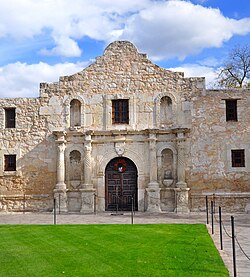
Kate Rogers, the Alamo Trust CEO, was forced to resign last Fall by Lt-Gov. Dan Patrick. Lt-Gov. Patrick publicly criticized Ms. Rogers’ discussion in a dissertation regarding Critical Race Theory, “reproductive rights of women” and the like. Her dissertation also stated she did not believe politicians should decide what professional educators should teach in the classroom. The dissertation was part of her doctoral program at the University of Southern California.

Ms. Rogers’ immediate supervisor, Dawn Buckingham, the state Land Commissioner, also criticized an online post by the Alamo regarding Indigenous People’s Day in October. The Land Commissioner’s office owns the Alamo. The Alamo Trust is the entity that runs the Alamo. Ms. Rogers has filed suit based on the First Amendment. See San Antonio Express-News report here.

First Amendment

Of course, the actions of Mr. Patrick and Ms. Buckingham violate the First Amendment. It is not even a close call. The First Amendment of the U.S. Constitution applies to state and local governments. Citizens have a right to speak about public events. It is odd that the Lt-Governor would object to comments made in a private dissertation paper that was completed two years ago. The paper would be filed in a library somewhere, but typically only researchers ever see dissertations. If the Lt-Governor had not made those comments public, who would know about them? Indeed, if what Rogers said in her dissertation was important enough to fire her, why did no one ask about it two years ago? In any event, I expect Lt-Gov Patrick’s concerns were more political than legal.

The only real issue will be the extent to which the actions of two state officials actually “forced” Ms. Rogers to resign. The caselaw actually sets a pretty high bar for what amounts to constructive termination, or being forced to quit. According to Ms. Rogers’ lawsuit, she was told to resign or be fired in a phone call. See Rogers v. Alamo Trust, No. 25-CV-01500 (W.D. Tex.). If so, then that action certainly amounts to a termination. The only issue will be if Alamo Trust denies that phone call. Otherwise, Ms. Rogers has a strong lawsuit. …. All this just to score some political points. Indeed, as her lawsuit points out, Ms. Rogers had just been promoted. She received favorable job reviews. Will the state have any defense? Perhaps not.

As a native of San Antonio and a long-time Alamo fan, I have to also add that the statements of which Ms. Rogers is accused are rather benign. They are the same thing the Alamo has been saying for years. The Alamo, now and when it was still controlled by the Daughters of the Republic of Texas, has been under a great deal of political pressure to acknowledge its mission roots. The battle is central to the story. But, the battle and heroism is not at all diminished by also telling the mission story. Any mainstream historian would have said the same.

A couple of weeks ago, the EEOC Chair, Andrea Lucas posted a video asking white males if they have suffered discrimination. If so, please report it to the EEOC. See NBC news report here. This is very unusual behavior for the EEOC. For decades, the EEOC has branded itself as neutral, not favoring employee or employer. See the NBC news report in which one former Commissioner of the EEOC states flatly the role of the EEOC has never been to seek out discrimination victims. But, this video clearly does seek to help employees. Taking sides makes any investigation conducted by the EEOC very problematic.

Anti-White Discrimination Claims Are Rare

Too, it is just odd the EEOC would seek white male discrimination. There is just not a lot of white male discrimination happening out there in corporate America. In some 30 years representing victims of discrimination, I have received at the most three phone calls complaining about possible anti-white discrimination. One of those calls resulted in a lawsuit. We lost that lawsuit on a motion for summary judgment, but that is a different story. All my colleagues who represent employees in other cities all report the same experience: there is just not much anti-white discrimination. But, absolutely, it does occur.

We know Ms. Lucas from her appointment as Chair. She promised then to “root out” unlawful DEI-inspired race and sex discrimination. See my prior post about her comments here. After this latest video by Ms. Lucas, I posted a comment on Twitter/X stating my experience that there is just next to no anti-white discrimination out there. Many folks objected to my comment. But, none pointed to any studies or anecdotal evidence to refute my post.

The problem with soliciting discrimination claims is that any such investigation will be viewed with skepticism by any employer. Isn’t that conventional wisdom, that if you look for something, you will find it? Ms. Lucas has seriously undermined the investigative role of the EEOC regarding these sorts of discrimination claims.

Many potential clients, friends and some folks I barely know share their knowledge with me about employment law.  Unfortunately, many of them are flat wrong. Here are a few of the more common employment law myths I encounter.

  • At will

“At will” employment means an employee can be fired for anything.” Texas is an at-will state. An employee can indeed be fired for a lot of things, but not for sex, religion, race, national origin, disability, violation of laws, etc. So, yes, an employer can fire you for wearing a blue tie to work, but not because you are too old.  The anti-discrimination statutes provide several exceptions to the at-will doctrine.

  • Probation period

“Probation periods means an employee can be fired for anything.” Not quite. A probation period means an employe can be fired for anything except sex, religion, race, national origin, disability, violation of laws, etc.  See above paragraph.

  • Copy of file

“Employees have a right to a copy of his/her personnel file.”  That depends on whether the employee is public sector or private. There is no authority in Texas law which says employees of private businesses can obtain a copy of their personnel file. As a public sector employee, an employe’s rights are governed by the Freedom of Information Act for federal employees and the Open Records Act for state employees. I can find no authority providing that a private sector employee has a right to a copy of his/her personnel file.

  • Rest breaks

“Employees get periodic breaks during the work day.”  I was told as a young warehouseman that we had a right to a 10:00 o’clock break and another at 3:00 pm.  The times could vary slightly, but that was the idea. Since then, I have looked for the authority for those breaks. There is no such authority. Most likely, that is or was part of the influence of collective bargaining agreements (union agreements). CBA’s do often provide for such breaks. But, for non-union employees, there is no authority for a mid-morning break and a mid-afternoon break. There is no state law or regulation on rest breaks or meal breaks. Federal regulations do not require a meal break. But, Federal regulations used to encourage work places to provide rest breaks, but notes a requirement. That provision was formerly found in 29 CFR Sec. 758.18 as recently as 2016. But, today, the term “rest break” is nowhere to be found in the federal regulations.

  • Non-compete agreements 

Some folks outside and inside Texas believes non-compete agreements are not enforceable in Texas. Yes, they are and have always been enforceable. They more enforceable with the decision in Marsh USA Inc. v. Cook, 354 S.W.3d 764 (Tex. 2010). But, then the Texas Supreme Court issued the decision in Exxon Mobil Corp. v. Drennen, 452 S.W.3rd 319 (Tex. 2014) which stated that the Marsh decision did not involve a “covenant not to compete.”

  • Free speech

The right to free speech exists only for government workers. There is no general right to free speech in a private workplace. But, there is protection for employees who discuss “terms and conditions” of employment. Those sorts of discussions are protected by the National Labor Relations Act. But, as far as discussing politics, football or cooking, there is no right to discuss whatever a worker wishes in the private workplace. I previously discussed the NLRA protections here.

  • Whistleblowing

There is no general whistle blower protection in Texas. I think most people think of whistleblowing as reporting wrongdoing to some law enforcement type entity. Employees in the private sector do not have protection against whistleblowing. But, there is a protection against requiring employees from violating criminal statutes. This sort of lawsuit is known as a Sabine Pilot type action. I discussed Sabine Pilot actions here. So, merely reporting administrative violations which do not have a criminal punishment, there are no such protections.

  • Not Written up before termination

People still ask me or tell me that the employer did not write them up before firing them. Well, employers do not have to do that. Yes, most large employers have nice looking employee manuals which state that employees must be written up before termination. But, these manuals are not binding. They have not even been arguanbly binding since about the early 1990’s. This is one employment myth that may never go away.

  • Privacy

Some folks still think they have some degree of privacy at work. Email is a frequent issue. Generally, email produced with use of the employer’s equipment and server belongs to the employer.  The employer may review your email anytime. I wrote about workplace email here and here.  The one exception appears to be when the employee accesses his/her private email server which is password protected.

There is no prohibition on private sector employers searching desks to my knowledge. But, the U.S. Constitution Bill of Rights applies to state governments. So, in the public sector, a worker has some protection from unreasonable searches if s/he has a reasonable expectation of privacy” that society is prepared to recognize as reasonable. See O’Connor v. Ortega, 480 U.S. 709 (1987), on remand, Ortega v. O’Connor, 817 F.2d 1408 (9th Cir. 1987).  But, the “expectation of privacy” can be limited by office practices and by legitimate regulation. And, HIPAA does protect medical information in most work situations.

So, as I tell folks on occasion, if you want fairness at work, then form a union.  Or, persuade your state legislature to make a few changes in the law, so all workers will benefit.

Motions to compel arbitration almost always succeed. One that did not was addressed in Parrott v. International Bank of Commerce, 778 F.Supp.3d 888 (W.D. Tex. 2025). In Parrott, the plaintiffs filed a class action regarding the employees’ profit-sharing plan. The proposed class sought to attack the investment strategy of IBC. Mr. Parrott left his job at IBC before the employer added the arbitration provision to the profit-sharing Plan. The Defendant then argued that the arbitration provision related back to the profit-sharing plan as it existed when Mr. Parrott was employed. That is, the employer argued that even if the arbitration provision came after Mr. Parrott had departed, the provision would relate back to the time when Parrott was still employed.

But, the U.S. District Court did not agree. The harm to the plaintiff occurred before he left his job, not after. That means the harm occurred before the arbitration provision was added. The profit-sharing Plan specifically defines a Plan participant as one who is employed by IBC. As a former employee, Parrott had already received his distribution under the Plan. That means no consideration passed to Mr. Parrott for his supposedly agreeing to the new arbitration provision. No consideration means the arbitration provision did not constitute a binding agreement.

So, the Court denied the Defendant’s motion to compel arbitration. See the decision here.

Pres. Trump’s assault on the Department of Justice has real-world consequences. Some 5,500 employees, including lawyers and support staff, have left or been fired from DOJ since January. That is out of a total staff of about 10,000. That means there are widespread vacancies across the country in DOJ. But, recruiting at law schools is down. Law schools report that persons at the top ranked law schools are avoiding DOJ.

The Department of Justice has long recruited the top ranked student at the top ranked law schools. But, after all the the unjustified terminations, the best and the brightest have little incentive to work there. On Fox News, the US Attorney for Washington, D.C., Jeanine Pirro, said her office lacked 90 lawyers and encouraged any lawyer listening to apply. In Chicago, the US Attorney, Andrew Boutros emailed former DOJ lawyers inviting them back.

William Treanor, former dean at Georgetown University Law Center, said traditionally, Georgetown students had great interest in working at DOJ. It was an ultra-competitive place of employment. But, now he says virtually no one is applying. See ABA Bar Journal report here for more information.

The precipitous drop is not surprising. DOJ lawyers are routinely being asked to risk their law license in advancing false statements of law and facts. It is an exceedingly difficult place for any attorney to work.

The Civil Service Reform Act of 1978 amended the prior law, which was passed in 1883. The current law is found at 5 U.S.C. §1101, et seq. The first Civil Service Act of 1883 changed what had been a political spoils system to a much more professional, stable work force. Prior to 1883, the Federal workforce was routinely changed whenever a new President entered office.

The new Trump administration wants to change all that. In the Project 2025 book, the authors make fantastic claims that Federal workers are not held accountable. The authors claimed that the Federal workforce included “careerists” who “lean to the Left.” The book cited no evidence for this over-the-top claim. I previously talked about Project 2025 and its effects on the Federal workforce here. It is safe to say that the Project 2025 book included many unrealistic claims about the Federal workforce.

Terminations without Cause

The Trump administration has fired hundreds of Federal employees without cause. Yet, the entire scope the Civil Service Reform Act is to require a stated cause. The foundation of the statute is that workers will only be fired for a good reason connected to job performance. A common myth today is that it is impossible or very difficult to terminate Federal employees. That is not true. But, it is true that a manager must show evidence of poor performance if he wishes to terminate a Federal employee. That generally means there must be some written warnings before an Agency can fire an employee.

Federal law requires that all Federal employees be treated fairly and equitably. 5 U.S.C. §2301(b)(2). They should be protected from arbitrary, personal favoritism, or coercion for partisan political purposes. 5 U.S.C. §2301(b)(8). 5 U.S.C. §2302 prohibits certain personnel practices. These prohibited practices generally include discrimination, including discrimination based on politics and including discrimination not based on job performance.

So, these hundreds of terminations for no stated reason will surely result in innumerable lawsuits and appeals to the Merit Systems Protection Board. The MSPB has jurisdiction over Federal terminations. Any Agency that goes to the MSPB with no written warnings in the file will lose. Maurene Coney, a former Assistant U.S. Attorney in New York, has taken a unique approach. She has filed in both the MSPB and in U.S. District Court. In her lawsuit, she argues that because the MSPB currently lacks a quorum, there can be no final decision. Therefore, she can file her claims in district court.

Too, when Ms. Comey was fired, the only stated reason offered by the Agency was the President’s authority under Article II of the Constitution. That is, the administration was claiming the power to fire any Federal employee for any reason. It has been arguing in court this creative “unitary executive” theory since last January. According to Ms. Comey’s Complaint, the MSPB has already stated that it lacks authority to adjudicate whether the President truly has some sort of unfettered Article II power to fire Federal employees. See Comey v. U.S. Dept. of Justice, No. 25-CV-07625 (S.D. N. Y.) lawsuit here.

Until these legal theories are adjudicated, hundreds of Federal employees will have some very solid lawsuits and appeals to the MSPB.

It is fair to say that before trial and during jury selection, a trial lawyer should use all the tools at his/her disposal. Many of us will check LinkedIn to take a look at a potential juror’s profile. But, do not do that in the Northern District of California. Judge William H. Orrick has a standing order in his court for lawyers to not access LinkedIn. Judge Orrick says whenever someone checks a profile, LinkedIn sends a notice to that person, letting them know who has looked at their profile. Judge Orrick considers that notification to amount to a prohibited contact of a potential juror.

One law firm, Alston & Bird hired a jury consultant. The firm did not tell the consultant about the standing order. The consultant checked LinkedIn. That research eventually came to the notice of Judge Orrick. The Judge sanctioned the firm $10,000 for this breach of his standing order.

The trial attorney, however, noticed the violation and notified the court. She did the right thing. That may be why the sanction was not higher than it was. The Judge said he has no problem with lawyers accessing publicly available information. But, the potential juror should receive no notice. See ABA Bar Journal report here for more information.

We can argue about whether a notification amounts to contacting the juror. But, we can all agree that such a notification could lead to impermissible sorts of contact.

In Oral arguments on Nov, 5, 2025, the issue was the power of the Trump administration to set tariffs on many products, from many countries for an unsopeofied amunt of time. Congress has delegated some tariff powers to the Executive branch over the decades. But, Pres. Trump claims a statute, known as the International Emergency Economic Powers Act, provides the Executive branch with an unlimited sort of tariff authority. This is remarkable, since the IEEP Act does not actually mention the word “tariff.”

It is not a core issue to the case, but it is important. The United States Solicitor General John Sauer had to know this would come up: who ultimately pays the tariffs? Do American consumers ultimately pay the tariff or does some combination of foreign countries, businesses, etc. pay the tariff? It is not a core issue, but who pays the tariff is important to the case. If U.S. citizens pay the tariff, then the tariff is a tax. In Oral arguments on Nov. 5, a few of the Justices referred to the tariffs as a tax. That is important, because Congress can delegate such a power only if it does so very clearly.

Are the Tariffs a Tax?

Asking a lengthy question, Justice Roberts referred to the tariffs as a tax. Solicitor Sauer disagreed. It was just a passing comment, but Justice Roberts stopped mid-sentence. Justice Roberts then switched to the tax issue. He noted that the vehicle of these tariffs is an imposition of taxes on Americans – which is a core power of Congress (and therefore, not easily delegable to the Executive branch). Sauer replied that it has not been “empirically” shown that Americans are bearing these tariffs. Fine. Justice Roberts asks who does pay for the tariffs?

Solicitor Sauer then obfuscated, He said it would depend on the contract between the country and the importer. Sometimes the importer would pay the tariff, sometimes the foreign producer would pay. It could be a wholly owned American subsidiary of a foreign corporation. It would be allocated.

Justice Roberts then points out that it has been suggested that the tariffs are decreasing the budget deficit – which suggests it is a revenue source. Sauer then responds that yes, there are collateral effects of tariffs. Justice Roberts did not respond at that point. Most judges would not. They just want to hear how the litigant handles the question.

In that moment, Solicitor Sauer lost his credibility. Simply to appease his ultimate client, Pres. Trump, he refused to acknowledge on the record that tariffs act as a tax. They are tax in every way but name. The American consumer will pay a large portion of the tariffs. And, Solicitor Sauer, even though experienced, committed a grievous sin in appellate advocacy: do not BS the Judge. We learned in law school to never avoid a question and never, ever avoid an obvious fact.

It was an embarrassing moment for Solicitor Sauer. Before the highest court in the land, he implicitly acknowledged that his accepted a case with a known, insurmountable weakness. He might well have worn a sign on his chest: “My case is a loser.” He way yet win on other grounds. But, when a lawyer obfuscates in court, he implicitly admits he does not believe in his case. That its why lawyers reject cases. Even Solicitors of the U.S. have the right to reject a case.

See audio recording in Learning Resources v. Trump, No. 24-1287 here.

This really is the season of hunting free speech advocates. I just penned a post on Universities throttling a professor’s free speech rights, and here comes Gov. Abbott with more of the same. The Governor of the Great State of Texas shared a post about a University of Texas professor who had been fired from an administrative role due to his ideology. See my prior post here. The governor shared the post and announced the state would target professors who push “leftist ideologies.”

The governor, an experienced lawyer, did not define “push” or “leftist ideology.” But, it is safe to say that the First Amendment free speech clause applies to state and local governments – which includes the University of Texas. See The Hill report here for more information.